.png "Facebook")


Decoding the Daily Routines of the World’s Top 10 High-Net-Worth Minds
The internet is flooded with simplistic advice about how the world’s richest individuals live. Articles promise that waking up at 4:00 AM, drinking cold-pressed celery juice, or repeating positive affirmations will magically unlock billions. The reality of ultra-high-net-worth performance is far more rigorous, nuanced, and structurally demanding.
When you examine the real, documented daily behaviors of the top 10 billionaires—leaders like Elon Musk, Jeff Bezos, Warren Buffett, Mark Zuckerberg, Jensen Huang, Bernard Arnault, Larry Ellison, and Bill Gates—a clear pattern emerges. Their success is not built on trendy wellness hacks; it is built on cognitive engineering, extreme leverage, asymmetric decision-making, and relentless protection of their bandwidth.
This deep dive breaks down the factual truths, documented schedules, and core operational frameworks that drive the highest levels of global enterprise.
The Top 10 Mindsets: Who Are We Analyzing?
To understand these habits in context, consider the individuals whose operational models form the basis of this study:
- Elon Musk (Tesla, SpaceX, xAI): Known for time-boxing, first-principles reasoning, and extreme engineering intensity.
- Jeff Bezos (Amazon, Blue Origin): Master of decision velocity, 8-hour sleep schedules, and long-term horizon thinking.
- Warren Buffett (Berkshire Hathaway): The ultimate practitioner of calendar subtraction, continuous reading, and extreme focus.
- Mark Zuckerberg (Meta): Pioneer of decision-fatigue reduction, physical resilience, and relentless pivot execution.
- Bernard Arnault (LVMH): The brand strategist who operates on multi-decade horizons and obsessively monitors store-level details.
- Jensen Huang (NVIDIA): Architect of flat organizational structures, zero-billion-dollar market creation, and real-time information flow.
- Larry Ellison (Oracle): Master of aggressive competition, strategic pivots, and long-term capital compounding.
- Bill Gates (Microsoft, Gates Foundation): The creator of "Think Weeks," deep focus blocks, and systematic learning loops.
- Larry Page & Sergey Brin (Alphabet/Google): Pioneers of unconstrained 10x thinking and technical architecture scale.
- Steve Ballmer (Los Angeles Clippers, ex-Microsoft): Master of operational discipline, high-energy execution, and structural commitment.
1. Asymmetric Time Management: Protecting Cognitive Bandwidth
The average professional manages their day through reactive schedules—responding to emails, accepting calendar invites, and attending back-to-back status meetings. The world’s top 10 billionaires view time as an irreplaceable, non-renewable asset and manage it with extreme structural protection.
Traditional Scheduling vs. Billionaire Cognitive Allocation

Traditional:  [ Reacting to Emails ] ➔ [ Back-to-Back Meetings ] ➔ [ Fragmented Deep Work ]
Billionaire:   [ Peak-IQ Deep Work ] ➔ [ High-Leverage Decisions ] ➔ [ Aggressive Subtraction ]
Time-Boxing vs. Calendar Subtraction
Billionaires generally follow one of two distinct scheduling paradigms:
- Extreme Time-Boxing (The Musk Approach): Elon Musk has historically divided his workday into five-minute micro-blocks. Every minute is assigned a specific operational objective—whether reviewing structural engineer reports at Starbase or auditing assembly lines at Tesla. This eliminates dead air and prevents Parkinson’s Law (the concept that work expands to fill the time allotted).
- Calendar Subtraction (The Buffett & Gates Approach): Warren Buffett famously keeps a physical pocket calendar that is almost completely blank. Buffett argues that busyness is the enemy of intellectual clarity. By refusing to fill his day with routine meetings, he preserves 5 to 6 hours daily for uninterrupted reading, reflection, and capital allocation. Bill Gates adopted a similar approach after observing Buffett, transitioning away from minute-by-minute panic toward isolated focus blocks.
The "Proactive Morning" Rule
Jeff Bezos structures his schedule around his personal circadian rhythm. He schedules high-cognition meetings—what he calls "IQ-heavy meetings"—strictly between 10:00 AM and 12:00 PM. Before 10:00 AM, he spends time puttering, reading the news, and having breakfast with family. By 5:00 PM, he avoids making major strategic choices, recognizing that decision fatigue severely degrades quality.
2. Knowledge Compounding: Reading as Core Work
A ubiquitous habit across the top 10 is the treatment of reading not as a leisure activity, but as a core job requirement.
               KNOWLEDGE COMPOUNDING MODEL

  [ Daily Reading ]  ──►  [ Pattern Recognition ]  ──►  [ Higher Decision Accuracy ]
         ▲                                                       │
         └─────────────────── 80% Allocation ────────────────────┘
The 80% Reading Rule
Warren Buffett spent up to 80% of his early career—and continues to spend the majority of his day—reading financial statements, trade journals, annual reports, and history books. He describes knowledge as something that compounds like compound interest:
"Read 500 pages like this every day. That’s how knowledge works. It builds up, like compound interest. All of you can do it, but I guarantee not many of you will do it."
Multi-Disciplinary Aggregation
Billionaires do not limit their reading to their immediate industry:
- Bill Gates reads approximately 50 non-fiction books per year, taking detailed margin notes to synthesize complex topics ranging from epidemiology to synthetic fuels.
- Elon Musk learned the fundamentals of rocket science by reading aerospace engineering textbooks, physics treatises, and Soviet rocketry histories, asking experts probing questions to validate his mental models.
- Jensen Huang reads academic papers on deep learning architectures, semiconductor physics, and graphics rendering to predict hardware bottlenecks 5 to 10 years in advance.
3. First-Principles Thinking: Deconstructing Reality to Base Truths
Most people reason by analogy—they look at what others are doing and iterate slightly on existing norms. The top 10 billionaires consistently operate through first-principles reasoning, a problem-solving framework derived from physics.
Breaking Problems Down to Fundamental Physics
First-principles reasoning requires boiling a problem down to its most fundamental truths—the elements that cannot be deduced any further—and building a solution from the ground up.
                      FIRST-PRINCIPLES VS. ANALOGY

Analogy:          "Battery packs cost $600/kWh because that's the market price."
                                      │
First Principles: "What are the raw materials? Cobalt, Nickel, Aluminum, Carbon."
                  "Raw cost = $80/kWh. We just need to invent a better assembly."
When Musk began SpaceX, aerospace contractors quoted him upwards of $80 million for a single rocket. Instead of accepting the price tag, Musk calculated the raw material cost of a rocket (aluminum, titanium, copper, carbon fiber, and rocket fuel). He discovered that the raw materials accounted for only ~2% of the typical rocket's retail price. By manufacturing over 70–80% of parts in-house, SpaceX radically reduced launch costs, disrupting the global aerospace market.
Jensen Huang’s "Zero-Billion-Dollar Market" Strategy
NVIDIA CEO Jensen Huang applies first-principles thinking to market creation. Instead of competing for existing, crowded market segments, Huang positions NVIDIA to solve extreme computational problems that currently have a "zero-billion-dollar market size." By building hardware and software stacks (like CUDA) years before AI models required them, NVIDIA positioned itself to capture vast market share when the technology matured.
4. Decision Velocity and the 70% Information Rule
In enterprise leadership, slow decisions often do more damage than imperfect decisions. High-net-worth founders optimize for decision velocity—the speed at which an organization can make high-quality, reversible choices.
Type 1 vs. Type 2 Decisions
Jeff Bezos categorized all corporate choices into two distinct buckets in his Amazon shareholder letters:
| Decision Type | Nature | Reversibility | Strategy |
|---|---|---|---|
| Type 1 | One-way door | Irreversible / High Risk | Slow, deliberate, highly analytical consultation. |
| Type 2 | Two-way door | Easily reversible | High velocity: Decide quickly with ~70% of desired data. |
Bezos observed that large organizations frequently stall because they apply heavy, slow Type 1 decision-making processes to light, reversible Type 2 scenarios.
The 70% Information Threshold
If you wait for 90% or more of the information to make a choice, you are moving too slowly. Top billionaires routinely make decisions when they possess roughly 70% of the required data. They rely on rapid feedback loops, real-time telemetry, and quick pivots to correct course if the remaining 30% reveals unexpected variables.
5. Ruthless Energy Management & Eliminating Decision Fatigue
Decision fatigue is a documented psychological state where the quality of choices degrades after long periods of decision-making. Billionaires structure their environments to minimize low-value choices, preserving mental energy for high-stakes problem-solving.
                     DECISION FATIGUE REDUCTION

  [ Low-Value Choice ] ──► Uniform Clothing / Meal Automation ──► Energy Saved
                                                                     │
  [ High-Value Choice ] ◄── Focused Capital Allocation ◄────────────┘
Wardrobe and Meal Automation
- Mark Zuckerberg famously wore the same style of gray t-shirt, jeans, and hoodie for years to eliminate trivial decisions every morning.
- Steve Jobs adopted his signature black turtleneck, Levi’s 501 jeans, and New Balance sneakers for the exact same reason.
- Many tech founders automate their daily meals, consuming identical, nutrient-dense breakfasts or lunches to keep their baseline cognitive load as close to zero as possible.
Sleep as a Cognitive Multiplier
Contrary to the popular myth that top performers survive on 3 to 4 hours of sleep, the majority of top 10 billionaires prioritize sleep for maximum cognitive output:
- Jeff Bezos insists on getting 8 hours of quality sleep, stating that sacrificing sleep to gain 1 to 2 productive hours is a bad trade if it decreases decision quality.
- Bill Gates, who routinely pulled all-nighters during Microsoft's early days, now targets 7 hours of sleep, noting in his writings that sleep deprivation severely damages logical reasoning and emotional control.
6. Asymmetric Risk and Regret Minimization
Media narratives often depict top billionaires as wild gamblers who took reckless risks. In reality, world-class entrepreneurs do not seek uncalculated risk—they specialize in finding asymmetric risk-reward profiles where the downside is strictly capped while the upside is virtually unlimited.
                 ASYMMETRIC RISK-REWARD PROFILE

     Downside (Capped):  [ Known, Manageable Loss ]
     Upside (Uncapped):  [=====================================> Exponential ]
The Regret Minimization Framework
When Jeff Bezos was deciding whether to leave his lucrative Wall Street career at D.E. Shaw to start an online bookstore, he created the Regret Minimization Framework. He projected himself forward to age 80 and asked a simple question:
"Will I regret missing out on a year-end Wall Street bonus? No. Will I regret not participating in this thing called the Internet that I thought was going to be a revolution? Yes."
This framework shifted his focus away from short-term downside risks toward long-term existential regrets.
Capping the Downside (Calculated Bets)
- Larry Ellison built Oracle by aggressively bidding on database contracts, but ensured contract terms and engineering frameworks allowed Oracle to pivot rapidly if initial technology assumptions failed.
- Elon Musk allocated his personal capital into SpaceX and Tesla in 2008 when both were near bankruptcy. While the move looked reckless to outsiders, Musk had evaluated the downside (losing his money) against the upside (enabling multi-planetary life and accelerating sustainable energy) and deemed the risk worth taking.
7. Multi-Decade Horizon Anchoring
While Wall Street operates on 90-day earnings cycles, top 10 billionaires think in terms of decades or centuries. This long-term perspective creates a sustained competitive advantage.
                      HORIZON THINKING GAP

  Competitors:  [ Q1 ] ──► [ Q2 ] ──► [ Q3 ] ──► [ Q4 ] (Quarterly Focus)
  Billionaires: [============ 10 to 20-Year Horizon ============]
Bernard Arnault & LVMH’s Heritage Play
Bernard Arnault built LVMH into a global luxury giant by acquiring heritage brands like Louis Vuitton, Dior, and Tiffany & Co. Arnault explicitly instructs his brand managers to think not about next quarter’s revenues, but about whether the brand will maintain its prestige 50 to 100 years from today. This long-term perspective dictates pricing, distribution, and product scarcity, preventing short-term discounting that could compromise brand equity.
The 10-Year Horizon Rule
Jeff Bezos famously noted:
"If everything you do needs to work on a 3-year time horizon, then you're competing against a lot of people. But if you're willing to invest on a 7-year time horizon, you're now competing against a fraction of those people."
At Amazon, investments in Amazon Web Services (AWS), Prime fulfillment networks, and Kindle hardware required years of capital expenditure and public skepticism before delivering massive returns.
8. Radical Flat Structures and Anti-Silo Communication
As corporations grow, middle management layers often distort information flow, resulting in slow execution and corporate blind spots. Top billionaires design communication architectures that route around traditional bureaucracy.
                    COMMUNICATION ARCHITECTURES

Traditional Hierarchy:    CEO ──► VP ──► Director ──► Manager ──► Engineer
Flattened Real-Time:     CEO ──────────────────────────────────► Engineer
Jensen Huang’s 50 Direct Reports
NVIDIA CEO Jensen Huang maintains an unusually flat corporate architecture, with approximately 50 direct reports. Huang shuns formal status-update meetings and long slide decks. Instead:
- Any employee at NVIDIA can write a "Top 5 Things" email outlining what they are working on, what problems they face, and what insights they have observed.
- Huang samples these emails directly from across the engineering hierarchy to monitor ground-truth operations without relying on management filters.
Musk’s Direct Communication Directive
In a famous internal memo to Tesla employees, Elon Musk detailed his policy on corporate communication:
- Anyone can talk directly to anyone else without manager approval.
- An engineer can speak directly to a VP, a manager can speak directly to an engineer in another department, and anyone can speak directly to Musk.
- Passing information up through managers, across to another manager, and down to an engineer creates extreme inefficiency and incentivizes politics over execution.
9. Non-Negotiable Health & Physical Resilience
High cognitive output over decades demands physical endurance. The top 10 billionaires treat their health as a foundational performance metric.
                     PHYSICAL RESILIENCE MATRIX

   [ Physical Fitness ] ──► Reduced Brain Fog ──► Sharp Capital Allocation
          ▲                                                    │
          └───────────── Daily Exercise Block ─────────────────┘
High-Intensity Physical Training
- Mark Zuckerberg transitioned from long-distance running to high-intensity martial arts (Brazilian Jiu-Jitsu and MMA) and hydrofoiling. Zuckerberg noted that martial arts require complete mental engagement, forcing his mind to fully disconnect from work problems for 1 to 2 hours every day.
- Jeff Bezos transformed his physical strength in his 50s through weightlifting, functional strength training, and strict nutritional guidance.
- Bill Gates plays tennis regularly to maintain cardiovascular health, agility, and mental focus.
10. Capital Allocation Mindset: Cash flow vs. Asset Ownership
The defining financial trait of top billionaires is that they do not trade time for money—they trade capital for ownership in compounding assets.
Focus on Equity, Not Salary
Most top billionaires receive modest nominal salaries (or famous $1 annual salaries). Their net worth is tied almost entirely to equity ownership in companies they control or advise:
- Steve Ballmer built his multi-billion-dollar fortune not primarily through executive compensation, but by negotiating a substantial equity stake in Microsoft during its early scaling phase and holding those shares long-term.
- Warren Buffett has drawn a modest base salary of $100,000 at Berkshire Hathaway for decades, relying on compounding stock value to build wealth.
                  THE CAPITAL COMPOUNDING LOOP

  [ Income Generated ] ──► [ Reinvested in Equity/Assets ] ──► [ Exponential Growth ]
Fact vs. Fiction: Debunking Popular Billionaire Myths
To build a realistic success strategy, it helps to separate popular internet myths from reality:
| Common Myth | Factual Reality |
|---|---|
| "They all wake up at 4:00 AM every day." | False. While some (like Tim Cook) wake up early, others (like Bezos and Musk) prioritize 7–8 hours of sleep and align schedules with their personal energy peaks. |
| "They take extreme, uncalculated gambles." | False. They focus on asymmetric risk profiles—capping downside risk while securing unlimited upside. |
| "They work 100 hours a week forever." | Contextual. Musk has worked 80–100 hour weeks during crisis phases, but figures like Buffett prioritize empty calendars, reading, and deep thought. |
| "They do everything themselves." | False. They master delegation, build flat corporate architectures, and empower elite talent to handle execution. |
The Billionaire Habit Blueprint: How to Apply These Principles
You do not need billions of dollars to implement these cognitive frameworks. Here is how to apply these habits to your own career or business:
                  DAILY IMPLEMENTATION BLUEPRINT

  ┌─────────────────────────────────────────────────────────────┐
  │  1. Protect Cognitive Time (10 AM - 12 PM IQ-Heavy Block)    │
  │  2. Read 30-60 Minutes Daily (Compound Knowledge)          │
  │  3. Use First Principles (Deconstruct Core Problems)        │
  │  4. Apply 70% Info Threshold (Speed Up Type 2 Decisions)     │
  │  5. Automate Low-Value Choices (Reduce Decision Fatigue)   │
  └─────────────────────────────────────────────────────────────┘
- Audit Your Calendar for Subtraction: Block off at least 2 hours of uninterrupted deep-work time every morning. Eliminate low-value status meetings.
- Build a Daily Reading Habit: Set aside 30 to 60 minutes daily to read non-fiction books, industry analyses, or scientific papers. Focus on foundational knowledge that does not spoil over time.
- Practice First-Principles Reasoning: When facing a costly or complex problem, list your core assumptions on paper. Ask: What are the unalterable physical or economic facts here? Rebuild your solution from there.
- Accelerate Your Decision Velocity: Identify "two-way door" decisions in your work. If a decision is reversible, make it as soon as you have ~70% of the information.
- Optimize Energy Over Time: Identify your highest-cognition hours and protect them for critical strategic work. Automate routine choices like meal planning or simple workflows to eliminate mental clutter.
By replacing superficial wellness advice with structural cognitive engineering, you can upgrade your decision-making, protect your mental energy, and build long-term personal leverage.


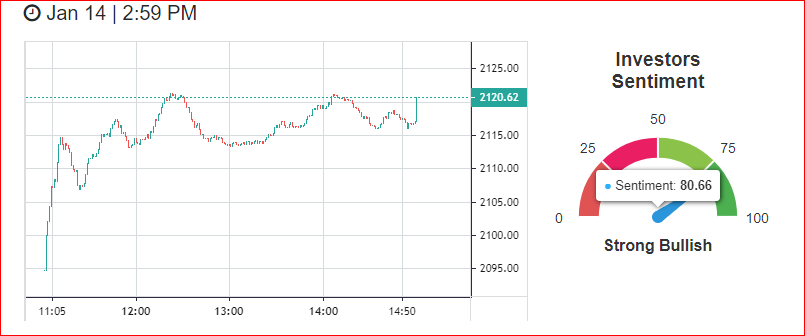
 The Nepal Stock Exchange (NEPSE) began the day with the market index at 2,083.04 points.